
Back to blog

How to Choose the Right Size of Grand Piano for Your Space

Few things bring more beauty and harmony to a room than a grand piano. For many, owning a grand is a lifelong goal. Maybe you’ve played your whole life on an upright but longed to experience the difference in sound and feel of a grand, or perhaps you finally have the space to bring one home.

That leads to one of the most common questions we hear: “I know I want a grand piano, but what size is right for me?”

In this guide, we’ll cover a brief history of the grand piano, a breakdown of piano sizes, key factors for choosing the right size piano, why larger pianos usually deliver better sound, how size affects touch and feel, when a smaller grand might make sense, and how to get personalized help for choosing a grand that’s best for you.

Grand piano history and why size matters

The first grand piano was built in 1700 by Bartolomeo Cristofori. Unlike the harpsichord, his invention let players control dynamics—playing softly or loudly just by touch. He also developed the escapement mechanism, a breakthrough that made expressive piano playing possible. His earliest surviving grand, dated 1720, is housed at the Metropolitan Museum of Art in New York.

During the 1800s, piano makers like Erard in France, Chickering and Steinway in the United States, and Bösendorfer in Austria refined Cristofori’s design, adding improvements in tone, touch, and longevity.

Why does this matter today? Because those innovations gave us the range of grands we know now—from compact baby grands to powerful concert grands—each designed with different spaces, players, and goals in mind.

Grand piano sizes explained: baby grand to concert grand

When we talk about piano “size,” we mean the actual measurement from the front of the piano keys to the very tip of the piano rim. There’s no universal agreement among builders on the perfect length — one maker may build a model at 5’7″ while another produces a similar one at 5’8″.

An inch or two in either direction doesn’t always mean a better or worse instrument; much depends on the scale design, which is essentially the blueprint that governs tone, structure, and feel.

That said, as a general rule, larger grands deliver a fuller sound and greater dynamic range. Here’s a broad overview of grand piano sizes produced by various manufacturers today:

  • Small Grand (4’11” – 5’5″): Great for small spaces, apartments, condos, small homes, casual playing, and for beginning or aspiring players.
  • Medium Grand (5’6″ – 6′): Versatile and popular for homes, smaller studios, serious students and pianists.
  • Full/Professional Grand (6′ – 7′): Ideal for advanced pianists, recording needs, and those seeking concert-level tone and touch.
  • Semi Concert & Concert Grand (7’ – 9′): Designed for large music rooms, performance halls, large venues, and institutions.

Key factors when choosing the right grand piano size

Before deciding on a grand piano size, it helps to think about a few key factors that will guide your choice. These can make a big difference in whether a piano feels at home in your space and meets your goals:
• Measure your space: Measure the room carefully, including bench clearance, and remember that ceiling height, flooring, and wall coverings will all impact acoustics.

  • Define your purpose: Think about whether the piano will be used for casual enjoyment, lessons, recording, or professional performance.
  • Set your budget: Keep in mind that larger sizes generally cost more, though quality often matters more than length alone.
  • Think about aesthetics: Consider that a grand piano can be the focal point of a room and think about how its presence will complement the space.

Many showrooms, including Classic Pianos, can help analyze the space you’re considering and help determine the right size grand piano for you.

Why larger grand pianos usually deliver better sound

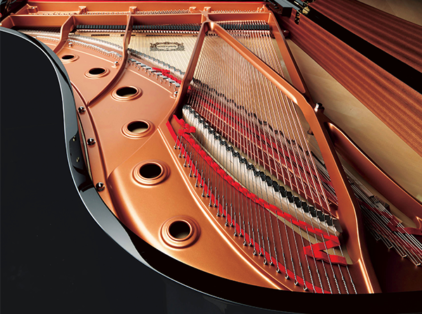
It’s often said that size matters in a grand piano, and here’s why: bigger grands have longer strings, larger soundboards, and action designs that give more tonal richness, resonance, and control.

s William Braid White, one of the most respected piano designers of the early 20th century and author of Piano Tuning and Allied Arts, explained, these physical advantages allow a piano to achieve smoother transitions, lower inharmonicity, and greater tonal balance across registers.

In simple terms, longer strings and a broader soundboard give the instrument more resonance, dynamic range, and expressive potential. This means:

  • Smoother tone transitions across registers
  • Greater dynamic range and responsiveness
  • Fuller, more powerful sound

That said, quality matters more than sheer size. A smaller, well-crafted grand will outperform a cheaply made larger one every time.

How grand piano size affects touch and action feel

One surprising aspect in selecting the right-sized grand is touch. While many people focus on tone, the touch — or the action — changes as well, and that difference can shape your entire playing experience. Consider this:

  • Smaller grands: The action geometry is more compact, meaning the keys and hammers have shorter levers. This can make the piano feel lighter or less responsive than a larger grand. You’ll probably notice this when playing softly or seeking nuanced dynamics. Many of our customers tell us they also find that smaller soundboards don’t always respond as easily to subtle variations in touch, which can make expressive control more limited.
  • Larger grands: Assuming quality construction, larger grands are usually built with longer keys and action mechanisms that provide greater dynamic control. When playing a larger, high-quality grand, many players tell us they feel more resistance and feedback, which allows for more expressive playing. Longer strings and a bigger soundboard also come alive with greater sensitivity and resonance, letting your touch shape the tone with more depth and expression.

In the end, it’s really all about the experience you are seeking and how that aligns with the other factors mentioned above.

When a smaller grand piano is the right choice

While bigger pianos often get the spotlight, there are plenty of situations where a smaller grand is the smart, practical choice. As with many things, there are exceptions to every rule. When purchasing a grand piano, there are times and good reasons when a smaller grand is the right choice. These include:

  • Limited space: In many modern homes, space is at a premium. In larger cities and even suburbs, many musicians and music lovers live in apartments, condos, or townhomes. Often, music studios in institutional settings are pretty small and can’t accommodate anything other than a small grand piano. In these settings, a quality semi-grand can work.
  • Budget considerations: We’re mindful that not everyone is in a position to spend the extra dollars necessary to purchase a large grand, and if they are, other priorities may prevent them from doing so. Smaller grands are generally more affordable and can be the right choice at the moment. And, if purchasing from a reputable dealer, these smaller grands can often be traded up later to a larger piano with very little loss in initial purchase value.
  • Visual appeal: Few things look better in a room than a grand piano, and a small compact grand is often chosen for how it looks rather than how it performs, and that’s a valid reason.
  • Beginner to intermediate use: For some, a smaller grand can still provide a beautiful touch and sound, especially if it’s a well-made instrument. If it’s from a reputable brand with a good action, it may offer better responsiveness than some verticals.

Ultimately, a smaller grand can strike the perfect balance of beauty, playability, and practicality when space or budget make a larger instrument less realistic.

FAQs about grand piano sizes

  • What is the difference between a baby grand and a concert grand? Size and purpose. Baby grands (under 6’) are ideal for homes and small spaces. Concert grands (7’ – 9’+) are designed for large venues and deliver maximum power and tone.
  • How much room do I need for a baby grand piano? At minimum, allow a 5’x7’ footprint, plus space for a bench. Make sure there’s additional clearance for lids, pedals, and comfortable seating.
  • What are the dimensions of a baby grand piano? Most baby grands range from about 4’11” – 5’5” in length and around 5’ wide. This makes them compact enough for many homes while still delivering the look and feel of a grand.
  • Is a baby grand better than an upright piano? It depends on your goals and available space. A quality baby grand typically offers richer tone and more responsive action than an upright, but uprights are more affordable and space-saving.
  • How much does a grand piano weigh? Depending on size, grands can weigh anywhere from 500 pounds for a baby grand to over 1,200 pounds for a concert grand.
  • Does a bigger piano always sound better? Not always. A high-quality, smaller grand often outperforms a cheaply made larger one. Craftsmanship and materials matter as much as size.
  • Can beginners start with a grand piano? Yes! A smaller grand from a reputable maker can be an excellent instrument for beginners and may encourage more consistent practice.

Classic Pianos can help you select the right size grand piano for your home

When it comes to grand pianos, there’s no such thing as “one size fits all.” The best choice depends on your space, goals, and budget. Luckily, you don’t have to figure this out on your own—we’re here to help you think through what will work best for your needs and space.

Feel free to contact us or give us a call at 303-777-2636 to play different-sized grand pianos from major brands, and to listen, feel, and decide which one fits you best. Our team of experts would be delighted to assist you in fulfilling your desire to own one of the world’s most majestic musical instruments.

Monday – Friday: 10am – 5:30pm
Saturday: 10am – 5pm
Sunday: By Appointment – Call 303-777-2636

WE SHIP NATIONWIDE